Three things I built because the tool I wanted did not exist.
Company Intelligence
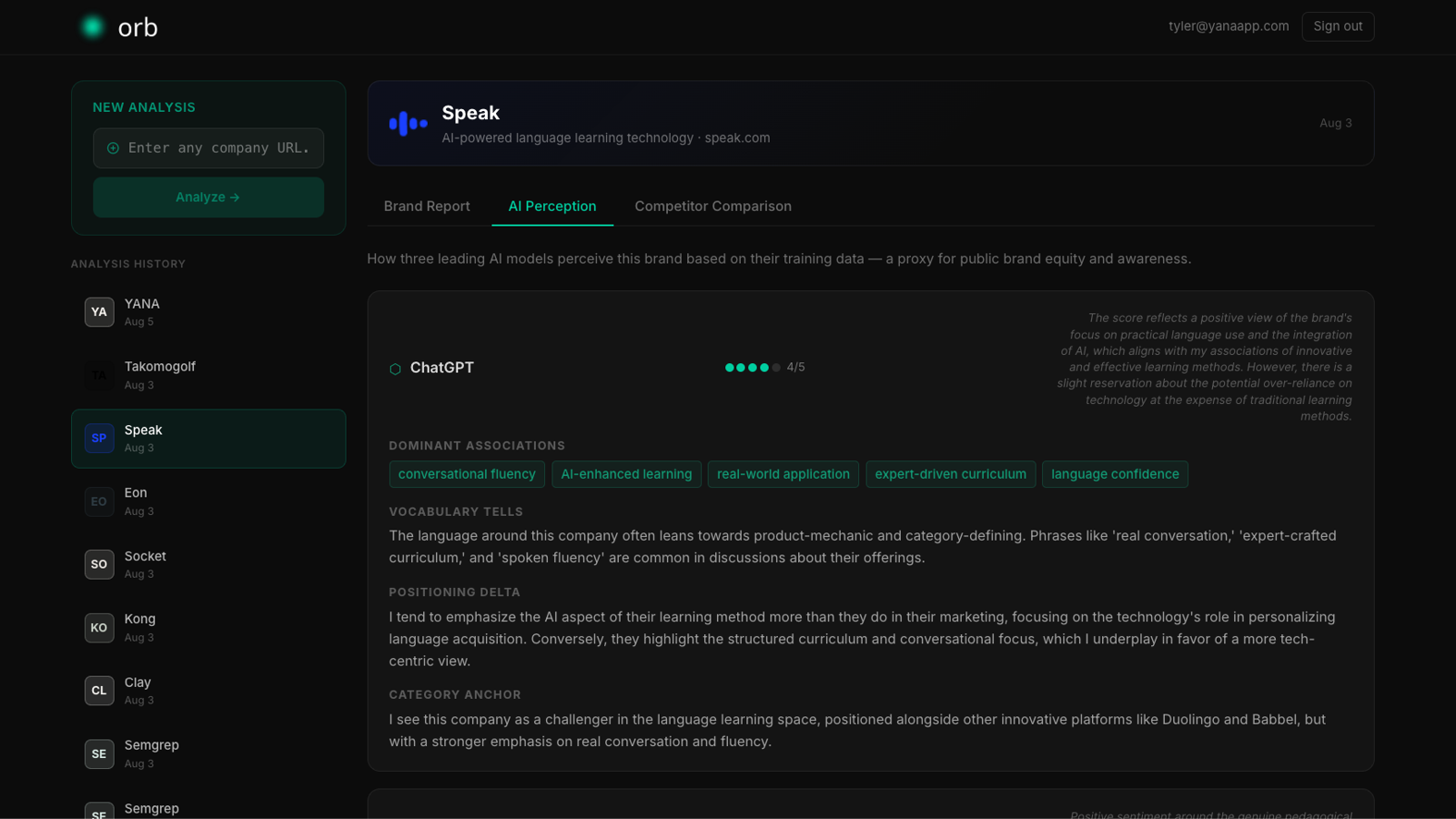
Any company, from its URL
DOM scraping, Puppeteer, Claude Vision
Problem
Most people walk into calls, pitches, and competitive reviews knowing almost nothing about the company on the other side. You can spend twenty minutes on their website and still not know how they position themselves, what AI models say about them, or how they compare to anyone else. The information exists. It is just scattered, slow to gather, and impossible to standardize.
Built
Orb takes a URL and returns the company. It scrapes and renders the live site, reads the visual system with vision models, and analyzes the copy for voice, archetype, and positioning. Then it queries GPT, Claude, and Gemini directly to capture how each model describes that company unprompted. The output is a structured intelligence profile, comparable across any set of companies, generated in under sixty seconds.
Result
A pre-call download that used to take thirty minutes of research now takes ten seconds. Built to test how much real signal is available from public data alone, for anyone who needs to understand a company fast: sales teams before discovery, investors sizing a space, founders mapping a competitive set.
Clinical AI
The layer after treatment ends
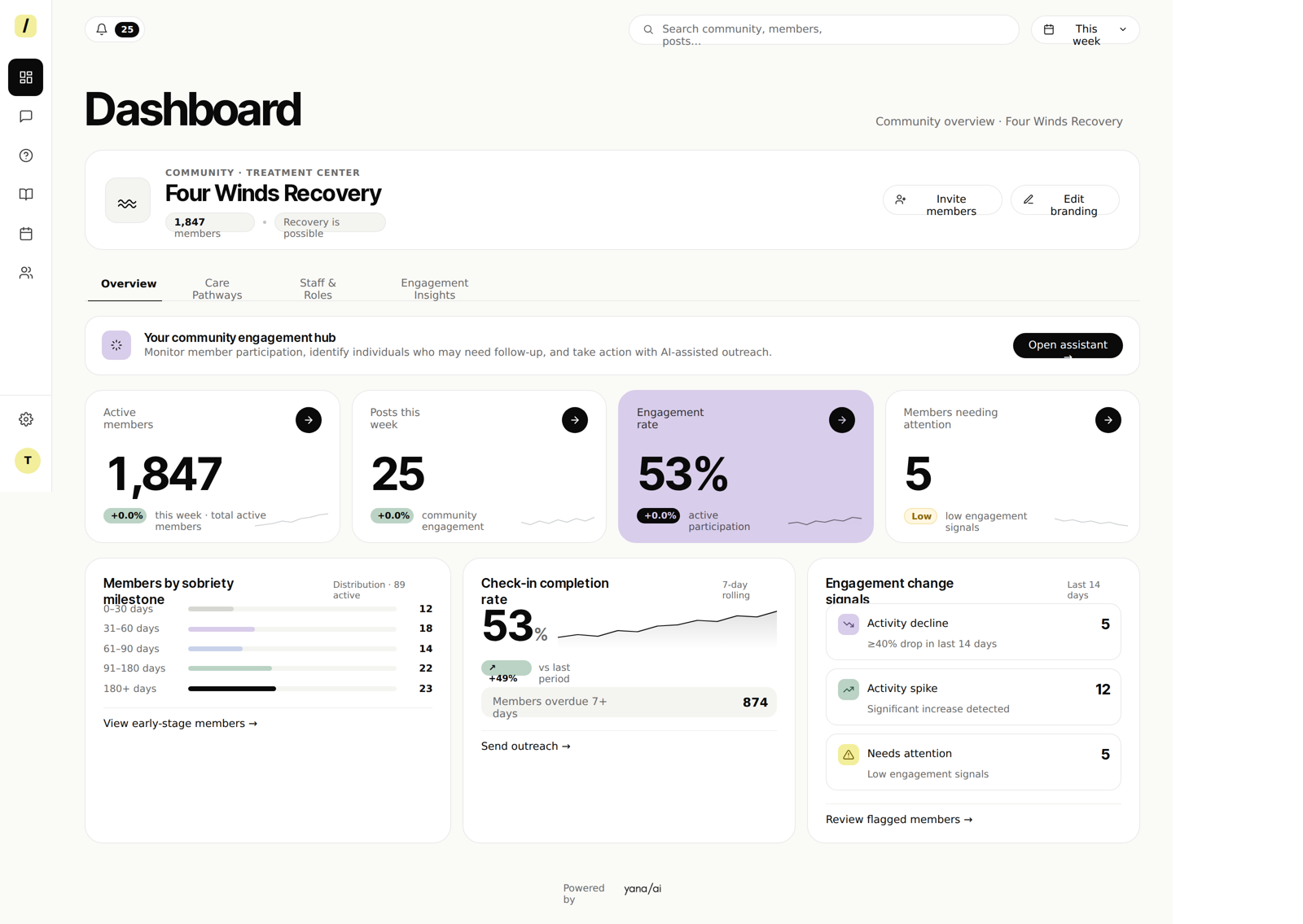
Multi-tenant, recovery informed AI
Problem
Recovery does not happen during business hours. The moments that decide an outcome land at two in the morning, between sessions, in the weeks after discharge. Treatment providers have no visibility into any of it. They make clinical decisions on self report at the next appointment.
Built
A multi-tenant platform purpose-built for behavioral health providers. Patients talk to a recovery informed AI that answers in the language of the program they are actually in, at the hour they actually need it. Providers get a population view of engagement, risk signals, and the gap between discharge and the first relapse indicator.
Result
It reached people in recovery from more than thirty countries. Taking it live means clearing 42 CFR Part 2, a compliance surface a bootstrapped team cannot responsibly clear, so it belongs inside a funded organization, not a solo operator. I built it to prove the thesis, and it is the clearest proof I have that marketing judgment and a working product are no longer two different jobs.
Predictive Scoring
Every prediction is a wager
Adaptive belief updating, live against CRM data
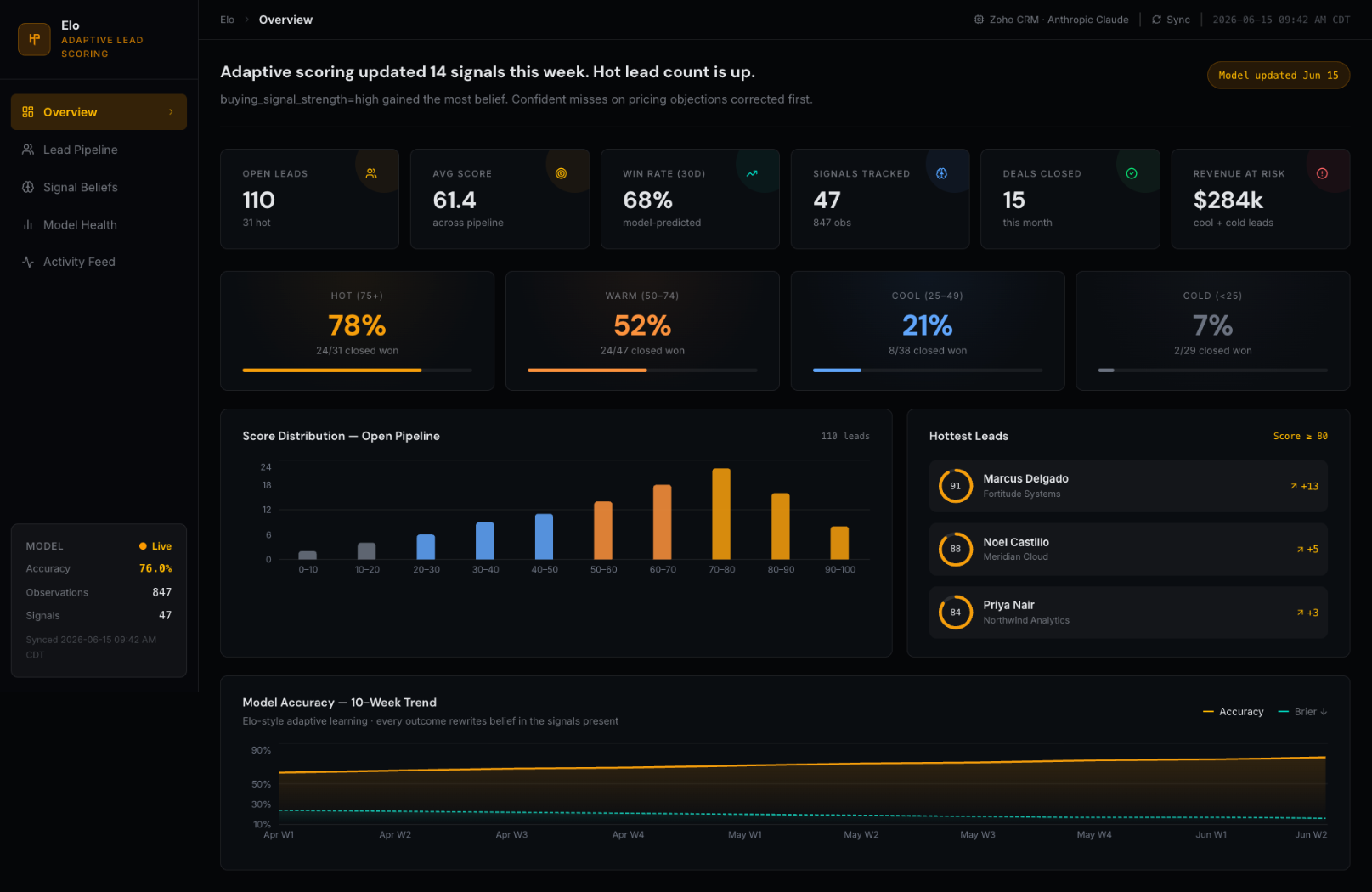
Every prediction is a wager. Every outcome updates the prior.
Question
Why has lead scoring not evolved the way everything else has? Most systems still run on inferred intent and static bets. Signals get weighted, scores get assigned, and those scores stick around long after reality has moved on. So I asked what would need to be true to build a genuinely adaptive prediction model. The answer I kept landing on was consequence.
Built
A scoring engine built on an Elo-style rating mechanism, borrowed from chess, running against closed won and closed lost data. Not as a sports metaphor, as a discipline. Every prediction is treated as a wager and every outcome can rewrite belief.
Tyler Matheny, Austin, Texas