The thesis was one question. In nearly a century of modern recovery, why has the relapse rate not improved?
It is not for lack of effort or expertise. Treatment itself has gotten better. The clinical hours are good, the programs are thoughtful, the people who work in them are among the most committed I have met in any industry. And the outcome data has barely moved in decades, which should tell you the problem is not inside the treatment.
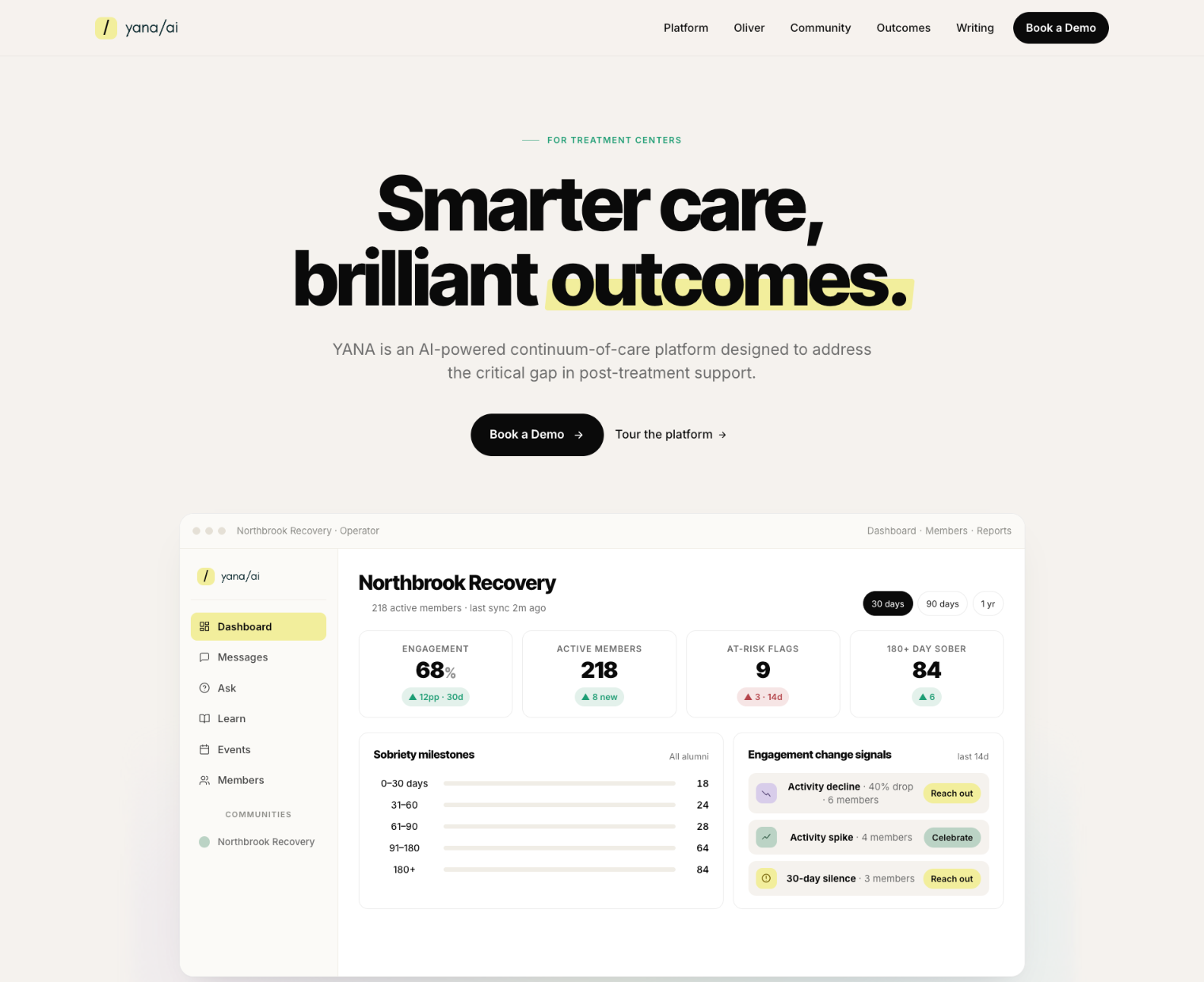
It is what happens after. Treatment ends on a Tuesday. Recovery does not. The window between discharge and stable sober living is where the system goes dark, and it goes dark at exactly the moment the person has the least structure they have had in months.
The moments that decide an outcome land at two in the morning. Providers make clinical decisions on self report at the next appointment.
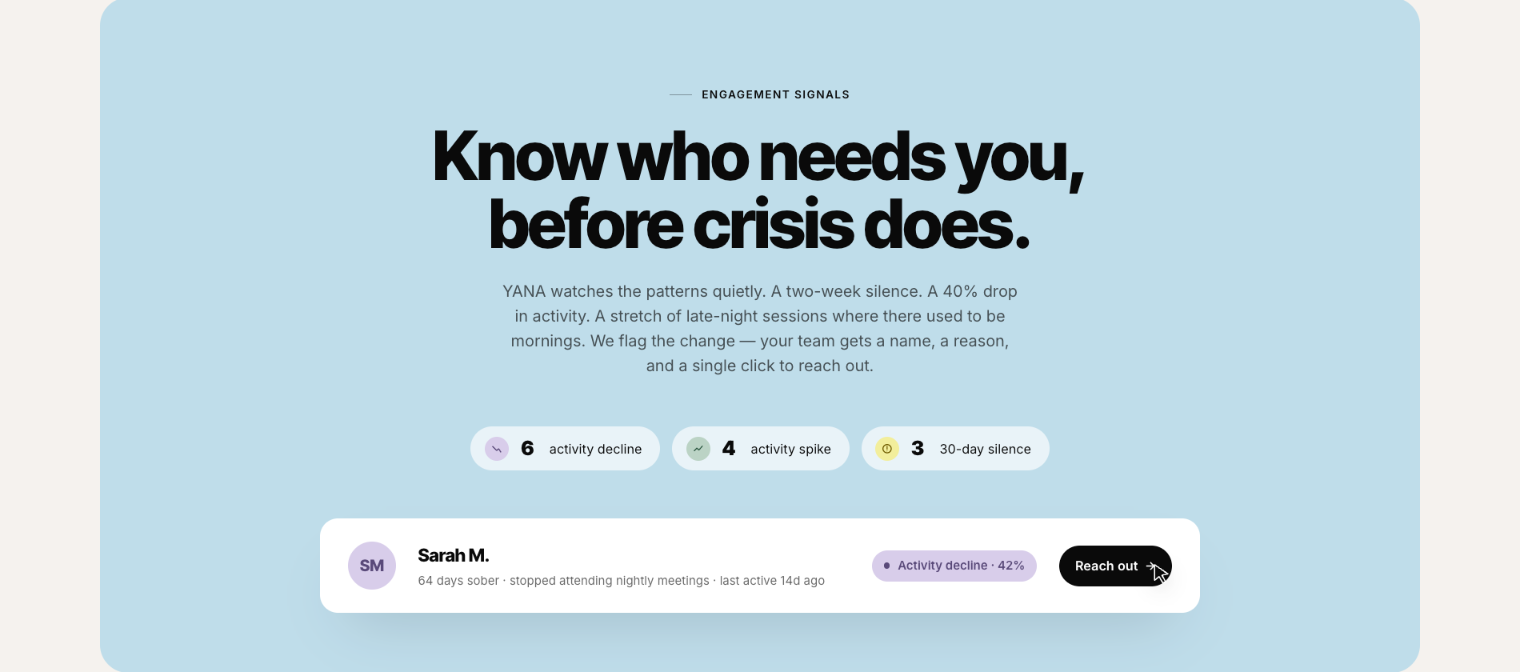
Two things follow from that. The person needs somewhere to go at two in the morning, and the provider needs to know it happened. Neither existed in any system I could find, and the second one turns out to be the harder problem, because it is the one that changes whether anything improves at the population level.
It reached people in recovery from more than thirty countries.
Scaling this into a live product means clearing 42 CFR Part 2, the federal confidentiality rule for substance-use records. That is a compliance surface a bootstrapped team cannot responsibly clear. It belongs inside a funded, resourced organization, not with a solo operator. So I built it to prove the thesis. Capability and judgment is how I stay involved.
What exists now is a thesis that survived contact with real users. The failure is not inside the treatment, it is in the hours after it, and those hours are measurable if someone bothers to instrument them. That reach is evidence that the need is real. It is not yet evidence that we moved the number, and I would rather say that than imply otherwise.
This one was personal, and I am not going to pretend otherwise. It is also the clearest evidence I have of something I now believe generally. Marketing judgment and a working product stopped being two different jobs somewhere in the last few years. Understanding a market well enough to position it and understanding it well enough to build for it turned out to be the same understanding.