The question was simple. How much can you learn about a company if all you have is the URL? It turns out, a lot.
Most people walk into calls, pitches, and competitive reviews knowing almost nothing about the company on the other side. You can spend twenty minutes on their website and still not know how they position themselves, what AI models say about them, or how they compare to anyone else. The information exists. It is just scattered, slow to gather, and impossible to standardize.
That last word is the one that mattered to me. Scattered and slow are annoying. Impossible to standardize is disqualifying, because it means you can never compare two companies fairly, which is the only thing anyone actually wants to do with this research.
A profile is only useful if it is comparable. Everything else in the build followed from that one constraint.
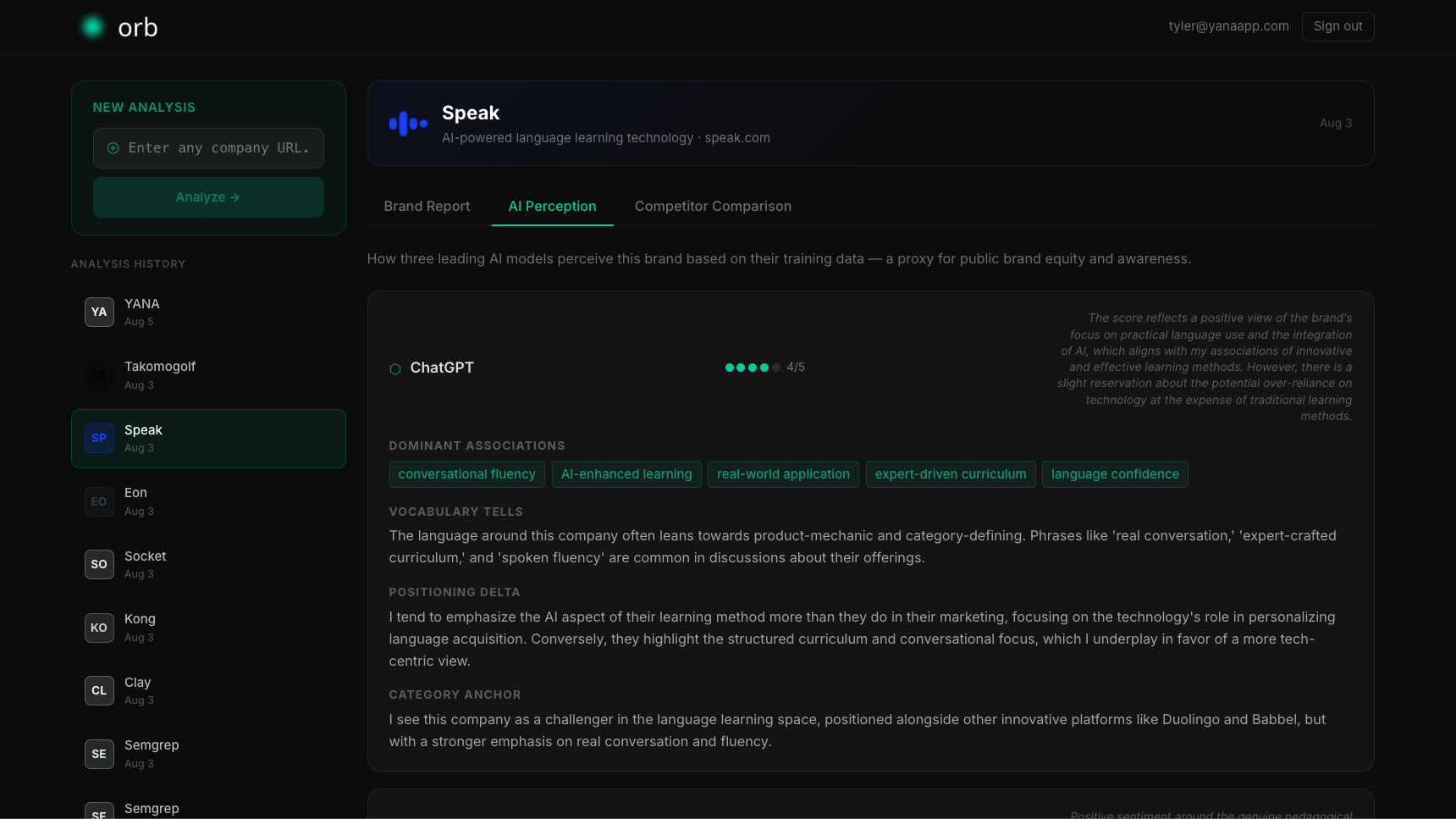
The tool takes a URL and returns the company. It scrapes and renders the live site, reads the visual system with vision models, and analyzes the copy for voice, archetype, and positioning. Then it queries GPT, Claude, and Gemini directly to capture how each model describes that company unprompted, which is increasingly the first impression a buyer forms. The output is one structured profile, generated in under sixty seconds, in the same shape every time.
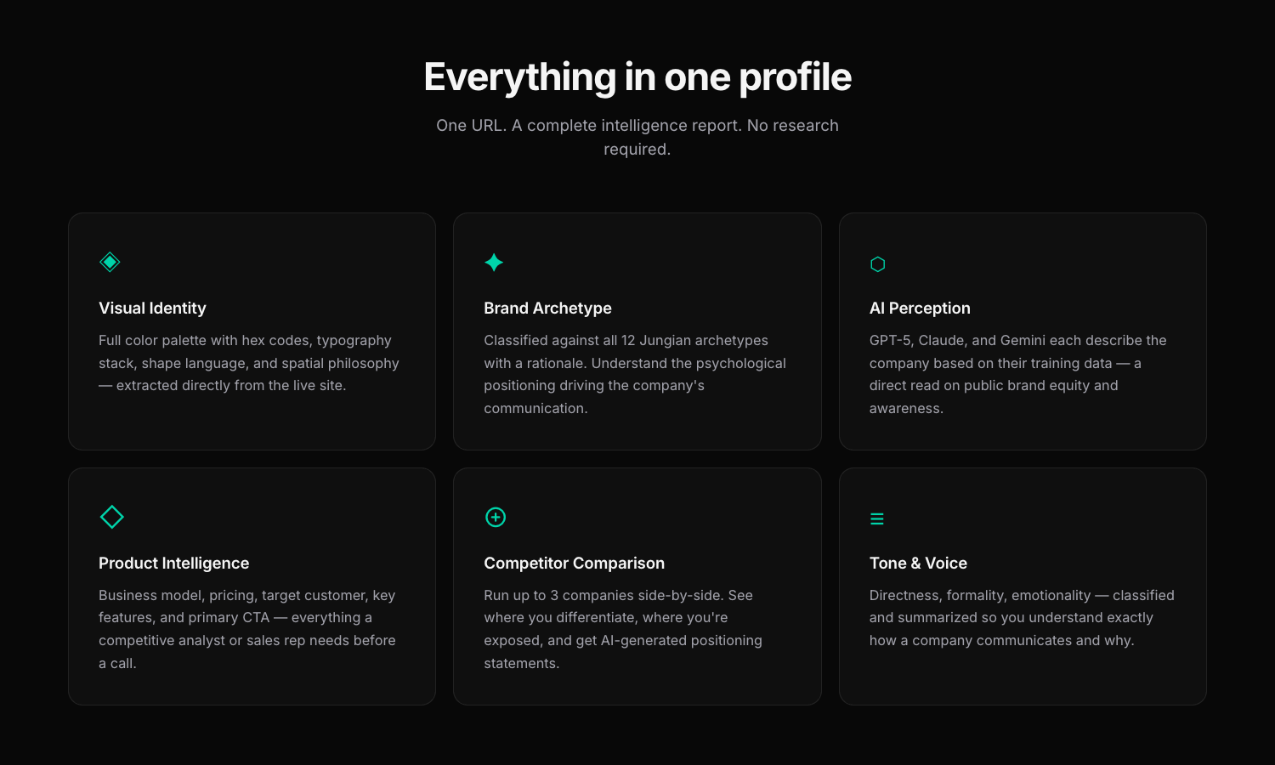
A pre-call download that used to take thirty minutes of research now takes ten seconds. That part is settled. The tool runs, it is open, and you can point it at your own company right now.
What I was actually testing is narrower than a product claim. How much real signal can be assembled from nothing but public data, and is that signal good enough to change how a conversation opens? I think the answer is yes, and I am aware that is my read rather than a customer’s. It did not replace an existing tool. It made data that was already public legible in a fixed shape, which is a different kind of win and an easier one to verify for yourself.
Who it is for held up better than I expected. Sales teams walking into discovery. Investors sizing a space. Researchers and founders who need a competitive set in an afternoon rather than a week. Different jobs, same underlying need, which is why the output is one fixed structure instead of a report tuned per audience.
The section people react to is the AI perception read. Companies are used to controlling their own copy. Almost none of them had seen a plain description of themselves written by a model that had read everything ever published about them, and the gap between the two is usually the real positioning problem.